Find Your Property

Residential

Contact Us

"*" indicates required fields

View our privacy policy regarding website enquiries.

Estate & Letting Agents In Marylebone

Intra-Capital Estates are estate agents in Marylebone. We’ve spent 10+ years immersed in the London property market, meaning the services we offer will give you a competitive edge. Our prime position allows us to lead you to a stunning collection of properties in Marylebone.

Whether you’re a first-time landlord or portfolio holder, our Marylebone letting agents can easily connect you with the ideal tenants for your property. Our knowledge of the local area, our tenant vetting process, and our expertise in property management means you can trust us to look after your interests – and enjoy stress free lettings.

We’ve sold £200m+ worth of real estate in and around Westminster, specialising in residential sales – so your property is in the best possible hands. Our Marylebone estate agents will guide you through the selling process and ensure you avoid common pitfalls.

our agents

team-member

Alastair Murray

Director

Contact Us

"*" indicates required fields

View our privacy policy regarding website enquiries.

Property Valuation

"*" indicates required fields

VALUATION TYPE*

View our privacy policy regarding website enquiries.

Book Free Valuation

Click below to book a valuation with one of our team members

Estate agent marylebone NW1

Looking to sell in Marylebone?

Selling your house can be challenging – from the tiring property search to the lengthy conveyancing process. Let our Marylebone estate agents take care of the process, helping you to avoid common pitfalls and allowing you to sell your home for its full value.

Property Valuation

"*" indicates required fields

VALUATION TYPE*

View our privacy policy regarding website enquiries.

Properties For Sale Near Marylebone

View All Properties
letting agent marylebone london

Looking to let in Marylebone?

Being a landlord isn’t always easy. Allow our Marylebone letting agents to take care of your key concerns, from tenant finding and maintenance, to legal compliance and paperwork. That way, your rental property will stay profitable for the long term.

Property Valuation

"*" indicates required fields

VALUATION TYPE*

View our privacy policy regarding website enquiries.

Properties To Let Near Marylebone

View All Properties

Address:

8 Hermitage Street, London, W2

Telephone:

0207 183 6676

Email:

info@intra-capital.co.uk

Opening Hours:

Weekdays: 8.30am-6.30pm
Saturday: Closed, viewings possible by appointment
Sundays/bank holidays: Closed

Book A Call

Contact Us

"*" indicates required fields

View our privacy policy regarding website enquiries.

Property Valuation

"*" indicates required fields

VALUATION TYPE*

View our privacy policy regarding website enquiries.

Our Marylebone Estate Agents

Get to know our team of Marylebone letting agents and estate agents, who are committed to moving your property journey forwards – whether you’re a buyer, seller, landlord or tenant.

Alastair Murray

Alastair Murray

Director

Arun Sivaganesh

Arun Sivaganesh

Director

Novia Sungeelee

Novia Sungeelee

Head of Property Management

Pierre Schneider

Pierre Schneider

Director

Find out more
Is Your Lettings Business Running Legally?

Is Your Lettings Business Running Legally?

Failing to follow the rules could leave you with up to £30K fine, or even a prison sentence.

It’s never been harder to keep up with compliance rules. As a landlord, there are over 170 laws you need to know and follow – and with the Renters Reform Bill on the horizon – it’s only going to get worse.

For that reason we’ve created this FREE compliance checklist for landlords.

Landlord Responsibility Checklist

"*" indicates required fields

View our privacy policy regarding website enquiries.

Marylebone Area Guide

Curious to know more about the Marylebone area? Then we highly recommend you read our brief guide. Get to know what makes the area so special, and why so many choose to call it home.

About Marylebone
Marylebone Property
Transport Links
Local Schools
Shops, Amenities & Attractions
Places of interest
Employment

Marylebone offers a tranquil escape just minutes away from the buzzing activity of the city centre. The area is defined by its charming, leafy streets lined with elegant period homes and chic boutiques. Its vibrant high street overflows with quaint cafes, independent shops, and high-end retailers like Kastur Jewels and Daunt Books.

Marylebone location & history: Marylebone sits in the heart of Central London, occupying the prime territory between Oxford Street and Regent’s Park in the City of Westminster. This sought-after district traces its origins to a medieval settlement by the River Tyburn, where a parish church dedicated to St Mary gave the area its name – St Mary-le-bourne, meaning “the stream of St Mary”. The area developed from two ancient manors, Lileston and Tyburn, transforming over centuries from rural hamlet to one of London’s most desirable addresses.

The neighbourhood’s current character was largely shaped in the 18th and 19th centuries when aristocratic families like the Portmans and Cavendishes commissioned grand Georgian terraces and garden squares. Their influence remains visible today in street names such as Portman Square and Cavendish Street. Unlike the grandeur of neighbouring Mayfair, Marylebone possesses a more understated elegance – frequently described as retaining village-like qualities despite its central location.

Marylebone demographics: The area draws a distinctly young professional population, with over 40% of locals aged between 20-39, significantly higher than London’s average. Single-person households dominate, reflecting the area’s appeal to career-focused individuals working in the West End and City. The housing stock combines period Georgian and Victorian terraces with purpose-built mansion blocks from the early 20th century, many now converted into flats.

Culture in Marylebone: Marylebone’s significance extends far beyond its architecture. Harley Street established itself as the centre of private medical practice in the 19th century, while the area’s literary connections include the fictional home of Sherlock Holmes at 221B Baker Street. The Wallace Collection houses world-class art in a historic mansion, and Wigmore Hall presents over 500 classical concerts annually. The neighbourhood also claims Beatles heritage – Paul McCartney lived on Wimpole Street during the 1960s, and EMI’s former headquarters occupied Manchester Square where the famous “Please Please Me” album cover photograph was taken.

Marylebone property covers period property, new homes, elegant terraces, mansion flats and more. Find out about the property landscape below:

  • Property types in Marylebone: Marylebone’s stunning period homes are the perfect reflection of the area’s unique charm and elegance. Predominantly Georgian, with a sprinkling of Victorian and Edwardian architecture, these properties have been converted into flats and apartments, attracting affluent young couples, City professionals, and even some famous faces.
  • Marylebone homes suit a range of buyers: For families, homes are more plentiful closer to Regent’s Park, while the area’s large student population adds to the lively atmosphere. Whether you’re searching for a spacious family home or a trendy flat, Marylebone’s properties offer the perfect balance of historic character and modern convenience.
  • House prices in Marylebone: House prices have recently averaged £1.3m, with flats being the most common property for sale, reaching £1.2m. However, terraces are significantly more at around £2.6m, while semis go for a steeper price at over £2.9m (Source: HM Land Registry).
  • Sought-after property in Marylebone: Some of the most exclusive and high-end streets in Marylebone include Harley Street, Wimpole Street, and Manchester Square – which typify the beautiful period properties in the area.
  • Property Developments in Marylebone: Marylebone has witnessed significant regeneration with several landmark projects recently completed or underway. Marylebone Square, completed in December 2023, represents the area’s most significant new development in decades – a mixed-use scheme providing 54 luxury apartments alongside boutique retail and community facilities on the former Moxon Street car park site. The 25 Baker Street development, a major 298,000 square foot office and residential scheme commenced in 2021, is transforming the northern end of the famous street. 100 George Street, a collaboration between Native Land and Derwent London, is progressing as an exceptional residential project. West End Gate by Berkeley Group continues to attract buyers seeking modern luxury living, whilst maintaining the area’s architectural integrity.

There are so, so many ways to get around Marylebone – from train travel to cycling. Take a look at the main options listed below:

  1. Car & Road: Marylebone is located right near the A40 which ensures easy access to the M25 and other major roads.
  2. Bus: There are several bus routes that run through Marylebone, including the 18, 27, 30, and 205 which cover most nearby locations in London.
  3. Train: There’s the Marylebone Station, offering regular train services to Birmingham, Oxford, and Aylesbury. The station is also home to the Chiltern Railways, which lets you travel to Buckinghamshire and Warwickshire.
  4. Tube: The nearest tube station is Baker Street, which is served by the Jubilee, Bakerloo, and Metropolitan lines. Bond Street and Oxford Circus tube stations are also within easy walking distance.
  5. Cycling: Marylebone has a bike-friendly environment, with many cycle lanes and bike-sharing options available.

If you’re looking for more info on Marylebone transport, then take a look here.

Marylebone and the surrounding area is full of great schools. You can see a great selection below, many of which have achieved an ‘Outstanding’ Ofsted rating.

  • Primary: Hampden Gurney CofE Primary School (Outstanding), St Vincent’s Catholic Primary School (Outstanding).
  • Secondary: Ark King Solomon Academy (Outstanding), The St Marylebone CofE School (Outstanding).
  • Independent: International Community School (Ages 3-19), Halcyon London International School (Ages 11-18).

Looking for more schools? A comprehensive list can be found on this local council portal.

Marylebone is full of shops, amenities and opportunities for leisure. Explore the various options below:

Marylebone food & drink: Marylebone is a hub of fine dining and is full of high-end shopping boutiques. You can visit the Michelin-starred Pied a Terre, glimpse Hollywood celebrities at the Chiltern Firehouse or head over to the flamboyant Artesian bar and enjoy a cocktail. Culture seekers can enjoy the finest musical performances at Wigmore Hall, view the great works of art hosted by the Wallace Collection or pay a visit to Madame Tussauds.

Leisure options in Marylebone: There are plenty of options for shopping, from the food market and Alfie’s Antique Market to local grocers including Waitrose and Tesco. Marylebone also has top-notch gyms and yoga studios, with Indaba Yoga being one of the best. Additionally, the area plays host to Harley Street, known for its private medical specialists.

Streets to explore: Marylebone High Street is the main shopping area, offering a mix of boutiques and cafes. Notable spots include Daunt Books and La Fromagerie. Chiltern Street features some upscale shops and dining options, while Marylebone Lane provides a quieter atmosphere with its own selection of stores and eateries. The area also has cultural attractions like the Wallace Collection and the Sherlock Holmes Museum. Marylebone caters to different interests, making it an appealing area for locals and visitors alike. New Cavendish Street acts as a major thoroughfare for the area, running right through the heart of Marylebone and leaves you with many different choices for dining, shopping and more.

There are many places of interest across Marylebone, with the streets themselves providing plenty to enjoy, see and explore. Here are a few notable options:

  1. Wallace Collection – The Wallace Collection is a national museum housed in a historic London townhouse. It features an exceptional array of fine and decorative arts, including paintings, sculptures, furniture, arms and armor, and porcelain. Highlights of the collection include masterpieces such as “The Laughing Cavalier” by Frans Hals and “The Rainbow Landscape” by Peter Paul Rubens. The museum is free to enter and offers 28 different exhibition rooms.
  2. Sherlock Holmes Museum – Located at the iconic address, the Museum is dedicated to the legendary detective created by Sir Arthur Conan Doyle. The museum recreates the Victorian-era setting of Holmes’ and Dr. Watson’s residence, complete with period furnishings and artifacts from the stories. Visitors can explore various rooms filled with memorabilia and even see a wax figure of Sherlock himself.
  3. Swingers – West End – Swingers is a unique entertainment venue that combines crazy golf with a 1920s seaside theme. Located near Oxford Circus, it features a luxurious nine-hole golf course, street food from some of London’s best vendors, and a variety of cocktails. The venue is strictly for adults, making it an ideal spot for a fun night out with friends.
  4. St. Christopher’s Place – St. Christopher’s Place is a charming and vibrant area known for its boutique shops, restaurants, and cafes. Nestled near Oxford Street, it offers a more relaxed and intimate shopping experience compared to the bustling main street. The area is perfect for leisurely strolls, dining, and discovering unique fashion and lifestyle stores.
  5. Marylebone Farmers’ Market – Held every Sunday, the Marylebone Farmers’ Market is a spread of fresh produce and artisanal goods. Located on Aybrook Street, the market features a range of products, including vegetables, meat, fish, cheese, and baked goods. It’s a great place to find seasonal and locally sourced items, and it offers a lively atmosphere that reflects the community spirit of Marylebone.
  6. Paddington Street Gardens – These charming gardens provide a peaceful retreat in the bustling area of Marylebone. Surrounded by beautiful Georgian architecture, the gardens offer a serene spot for relaxation, picnics, and leisurely strolls, appealing to residents seeking a green escape
  7. Madame Tussauds – Located on Marylebone Road, Madame Tussauds is a world-famous wax museum featuring lifelike figures of celebrities, historical figures, and fictional characters. It’s a popular attraction for both tourists and locals, offering interactive exhibits and themed areas, including a Marvel Universe 4D experience.

Marylebone stands as one of London’s most prestigious business districts, anchored by three dominant employment sectors that collectively drive the local economy – medicine, media and finance. Find out more below:

  • Medical services industry: The area’s crown jewel remains Harley Street, the world’s most renowned medical district, which employs over 3,000 people across private clinics, specialist practices, and medical organisations. This healthcare cluster has expanded significantly since the 19th century, growing from around 20 doctors in 1860 to today’s comprehensive ecosystem of medical professionals, support staff, and allied health services. The district benefits from continuous investment, with recent developments like Hale House providing state-of-the-art workspace for HealthTech innovators, reinforcing Marylebone’s position as a global healthcare hub.
  • Media & broadcasting: The media and broadcasting sector provides another major employment pillar through BBC Broadcasting House on Portland Place, which serves as the corporation’s headquarters and houses over 5,000 journalists and support staff. The facility underwent extensive renovation completed in 2013, creating one of the world’s largest live broadcast centres and consolidating BBC’s national radio, television, and online operations under one roof. This has attracted numerous supporting businesses, from media training companies to broadcast studios, creating a thriving ecosystem around the BBC’s operations.
  • Financial services: Financial and professional services complete Marylebone’s employment triangle, with numerous investment management firms, recruitment agencies, and professional service providers choosing the area for its prestige and central location. Companies like Marylebone Partners LLP exemplify the high-calibre financial services operating from the district, while the area’s excellent transport links make it particularly appealing to businesses serving City and West End clients. The concentration of Georgian townhouses converted to premium office space continues to attract growing companies seeking prestigious addresses, ensuring sustained employment growth across multiple sectors.

Marylebone FAQs

Get answers to common questions about living in the Marylebone area.

Marylebone is in the City of Westminster, one of the most prestigious boroughs in London. Westminster is a central London borough that also encompasses Mayfair, Soho, Covent Garden, Pimlico, and Paddington. As part of Westminster, Marylebone falls under the Westminster City Council for local government services, council tax, and planning applications.

The area’s W1 postcode is among the most recognised and desirable in the capital, reflecting its prime central London location and the high standards of the borough’s public services, streetscape maintenance, and heritage conservation.

Marylebone station is served by the Bakerloo line on the London Underground, providing direct connections to destinations including Paddington, Oxford Circus, Piccadilly Circus, Waterloo, and Elephant & Castle. Marylebone is also a mainline National Rail terminus operated by Chiltern Railways, offering services to Birmingham, Oxford, High Wycombe, and Aylesbury.

Beyond Marylebone station itself, the area benefits from exceptional transport connectivity with several other Underground stations within walking distance. Baker Street (Circle, Hammersmith & City, Metropolitan, Jubilee, and Bakerloo lines), Bond Street (Central, Elizabeth, and Jubilee lines), Regent’s Park (Bakerloo line), Great Portland Street (Circle, Hammersmith & City, and Metropolitan lines), and Edgware Road (Circle, District, Hammersmith & City, and Bakerloo lines) are all easily accessible on foot. This makes Marylebone one of the best-connected neighbourhoods in central London.

Marylebone is located in the heart of central London, in the West End. It sits north of Oxford Street and Mayfair, south of Regent’s Park, east of Paddington and Edgware Road, and west of Fitzrovia and Bloomsbury. The area falls within Zone 1 on the Transport for London network and carries the W1 postcode.

Marylebone’s central position means it is within easy walking distance of some of London’s most famous landmarks and destinations. Regent’s Park and London Zoo are on its northern doorstep, Oxford Street’s shopping district lies immediately to the south, and Hyde Park is a short stroll to the southwest. The West End’s theatres, restaurants, and cultural attractions are all readily accessible, making Marylebone a uniquely convenient base for both residents and visitors.

Marylebone Road sits on the northern boundary of London’s Congestion Charge Zone (CCZ). The road itself forms part of the boundary route and is technically within the zone, so drivers should be prepared to pay the charge when travelling along it. As of January 2026, the Congestion Charge is £18 per day, applicable Monday to Friday from 7:00am to 6:00pm, and from 12:00 noon to 6:00pm on weekends and bank holidays. The charge does not apply between Christmas Day and New Year’s Day.

If you are considering driving into Marylebone, it is worth noting that street parking is heavily restricted, with many spaces reserved for residents or limited to off-peak hours. The NCP car park on Marylebone Road offers around 120 spaces for visitors. However, given the area’s outstanding public transport connections, many residents and visitors find it more convenient to travel by tube, bus, or on foot. Residents living within the CCZ can apply for a 90% discount on the Congestion Charge.

Marylebone is most commonly pronounced “MAR-lee-bun” by Londoners, with three syllables and a soft, unstressed final syllable. You may also hear it said as “MAR-lee-bone” (with a hard final syllable) or occasionally “MARRY-le-bun,” depending on regional accents and personal preference.

The name derives from the church of St Mary by the Bourne — “bourne” being an old English word for a stream, referring to the Tyburn River that once flowed through the area. Over the centuries, “St Mary le Bourne” was gradually contracted into the single word “Marylebone.” All three common pronunciations are widely accepted, though “MAR-lee-bun” remains the most traditional and frequently used among locals and on TfL announcements.

Marylebone is widely regarded as one of the best places to buy property in central London, offering a rare combination of prime location, village-like atmosphere, and long-term investment appeal. The area consistently ranks among London’s most desirable residential neighbourhoods, attracting both domestic and international buyers.

Key factors that make Marylebone attractive to buyers include its elegant Georgian and Edwardian architecture, proximity to Regent’s Park and Hyde Park, the vibrant independent retail and dining scene along Marylebone High Street, and the presence of renowned Harley Street medical facilities. The area also benefits from excellent schools, cultural institutions such as the Wallace Collection and Wigmore Hall, and a strong sense of community that is unusual for central London.

Yes, Marylebone is one of the wealthiest and most affluent neighbourhoods in London. Situated in the City of Westminster, it has been a fashionable and prosperous area since at least the seventeenth century, and it continues to attract high-net-worth individuals, professionals, and international residents.

Property prices are a clear indicator of the area’s affluence, with average sold prices well above the London-wide average. Marylebone’s streets are lined with grand Georgian townhouses, elegant mansion flats, and beautifully maintained period properties. Harley Street, one of the most famous medical addresses in the world, runs through the heart of the neighbourhood.

The area’s retail and dining offerings reflect its affluent character. Marylebone High Street and Chiltern Street feature independent boutiques, designer homeware shops, artisan food stores, and acclaimed restaurants. Residents enjoy access to premium gyms, private members’ clubs, and some of London’s finest cultural venues. The neighbourhood’s proximity to Regent’s Park, with its 166 hectares of green space, adds further to its appeal as a prestigious place to live.

Marylebone is generally considered a safe and well-maintained neighbourhood, particularly by central London standards. The residential streets have a calm, village-like atmosphere with good street lighting, well-kept public spaces, and a visible sense of community.

As with all central London areas, crime statistics should be interpreted carefully. Westminster as a borough records high overall crime figures, but this is largely due to the enormous number of visitors, commuters, and tourists passing through the borough daily — the resident population is relatively small in comparison.

The residential streets away from the main thoroughfares — such as those around Marylebone High Street, the Harley Street medical district, and the quieter squares and mews — feel notably safe and peaceful. Many buildings have porters or concierge services, and the area is well covered by CCTV. For families, professionals, and retirees alike, Marylebone offers a reassuring sense of security within the heart of the capital.

Marylebone offers a variety of desirable rental locations, each with its own distinct character and appeal. The best area for you will depend on your lifestyle priorities, budget, and what you value most in a neighbourhood.

  • Marylebone Village (around Marylebone High Street) is the most sought-after rental location, offering immediate access to independent shops, cafés, restaurants, and the weekly Marylebone Farmers’ Market. Properties here tend to be elegant period flats in converted Georgian buildings, and rental prices reflect the premium location.
  • Chiltern Street and surrounding streets have become increasingly fashionable, with a vibrant mix of boutique hotels, lifestyle stores, and acclaimed restaurants. Flats in this micro-neighbourhood appeal to young professionals and creatives seeking a stylish central London base.
  • The Harley Street area attracts medical professionals and those working in the healthcare sector, thanks to its proximity to London’s most prestigious medical practices and hospitals. Rental properties here are typically well-appointed mansion flats and period conversions.
  • The streets bordering Regent’s Park (including Park Crescent and the Outer Circle) offer some of Marylebone’s most prestigious addresses, with grand Nash-designed terraces and stunning park views. These properties command the highest rents in the area but provide an unrivalled living environment.
  • Dorset Square and the western fringes near Marylebone station offer slightly more accessible rental prices while still being firmly within the Marylebone neighbourhood. These areas suit commuters who use the Chiltern Railways services and want easy access to the Bakerloo line.

Buying a flat in Marylebone is a significant investment, and there are several important factors to consider before making your purchase.

  • Leasehold is the norm. The vast majority of flats in Marylebone are leasehold rather than freehold. Pay close attention to the remaining lease length — anything below 80 years can make it significantly more expensive to extend the lease and may affect mortgage availability. Check the annual service charges and ground rent carefully, as these can be substantial in prime central London buildings, particularly those with porter services, communal gardens, or period building maintenance requirements.
  • Property types vary considerably. Marylebone’s housing stock includes everything from grand Georgian mansion flats and Victorian conversions to purpose-built blocks and modern developments. Each type has different considerations regarding maintenance, insulation, noise levels, and potential for reconfiguration.
  • The freeholder matters. Much of Marylebone is owned by the Howard de Walden Estate, one of London’s great landed estates. The estate takes an active role in maintaining the character and quality of the neighbourhood, which generally works in residents’ favour but can mean stricter conditions on alterations and use.
  • Understand the local market. Flats account for a high proportion of property sales in Marylebone. Average flat prices currently range from around £890,000 to over £1.5 million depending on size, condition, and exact location. Properties typically spend around 19 weeks on the market. Work with an estate agent like Intra-Capital Estates who has specialist knowledge of the Marylebone market to ensure you are paying a fair price and understand the nuances of different streets and buildings.
  • Factor in ongoing costs. Beyond the purchase price, budget for Stamp Duty Land Tax (which is significant at Marylebone price levels), solicitor and surveyor fees, service charges, ground rent, council tax (Westminster Band rates), and the Congestion Charge if you drive.

Marylebone boasts one of the finest and most diverse dining scenes in London, with options ranging from Michelin-starred fine dining to beloved neighbourhood cafés.

  • Fine dining and special occasions: The Chiltern Firehouse remains one of London’s most coveted restaurant reservations, offering modern American-inspired cuisine in a glamorous converted fire station. Orrery, a Marylebone institution for over two decades, serves elegant French cuisine with a terrace overlooking Marylebone High Street. Fischer’s brings the charm of a grand Viennese café to the neighbourhood, perfect for a leisurely brunch or refined dinner.
  • Casual dining and everyday favourites: St John Marylebone, an offshoot of Fergus Henderson’s legendary Smithfield restaurant, celebrates the best of British cooking with its signature nose-to-tail approach. Granger & Co is a popular choice for brunch and all-day dining, while The Ivy Café Marylebone offers modern European classics in an art deco-inspired setting.
  • Cafés and delis: The Paul Rothe & Son delicatessen has been serving homemade sandwiches and hearty goulash since 1900 — it is a genuine Marylebone institution. Monocle Café on Chiltern Street offers Scandinavian-inspired light meals in a minimalist setting, and the neighbourhood is home to numerous excellent independent coffee shops.
  • Pubs and bars: The Golden Eagle is a rare independently owned pub in central London, with a warm, characterful atmosphere. Seymour’s Parlour at The Zetter Townhouse hotel serves inventive cocktails in an intimate, candlelit setting. For wine lovers, 28-50 Marylebone offers an exceptional wine list alongside seasonal European food.
  • Markets: The Marylebone Farmers’ Market, held every Sunday in the Cramer Street car park, is one of London’s best farmers’ markets, selling fresh produce, artisan baked goods, cheeses, and street food directly from producers.

Marylebone consistently ranks among London’s most desirable neighbourhoods for several compelling reasons that, taken together, create an unrivalled central London lifestyle.
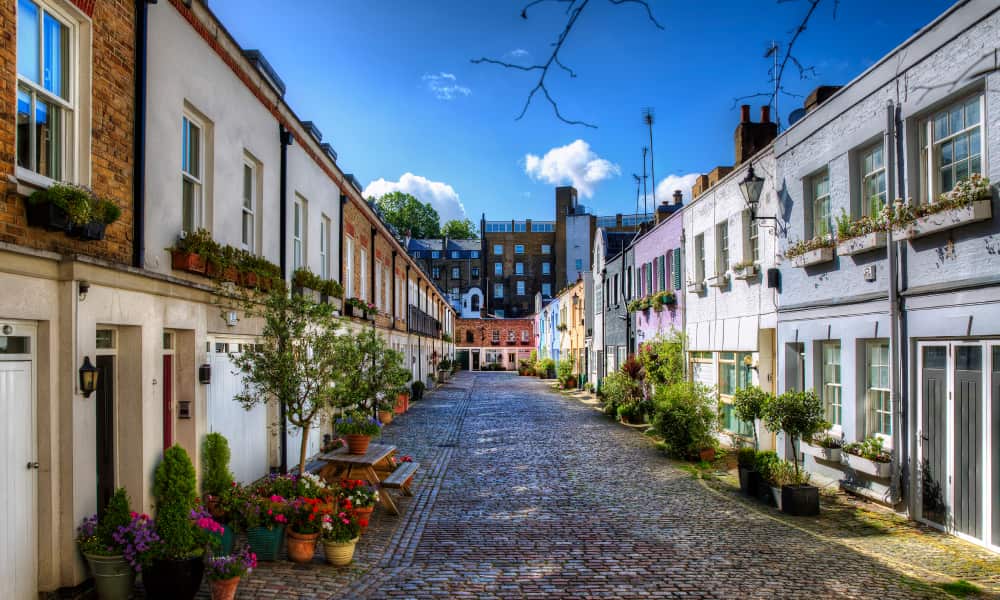
  • The village-in-the-city atmosphere. Despite being in the heart of Zone 1, Marylebone retains a genuine village character. The tree-lined residential streets, independent shops, weekly farmers’ market, and strong sense of local community set it apart from busier neighbouring areas like the West End and Oxford Street.
  • Exceptional transport connectivity. With Marylebone mainline station, multiple Underground stations serving six different tube lines, the Elizabeth line at Bond Street, and extensive bus routes, few London neighbourhoods can match Marylebone’s transport links. Heathrow Airport is reachable in 20 to 30 minutes, and the Eurostar at St Pancras is a short journey away.
  • World-class amenities. From Harley Street’s renowned medical practices to the cultural riches of the Wallace Collection and Wigmore Hall, from the boutique shopping of Marylebone High Street to the green expanses of Regent’s Park, Marylebone offers an extraordinary concentration of high-quality amenities within a compact, walkable area.
  • Architectural beauty and heritage. The area’s elegant Georgian terraces, grand mansion blocks, quiet mews streets, and John Nash’s iconic Regent’s Park terraces create one of the most visually striking residential landscapes in London.
  • Strong investment fundamentals. Marylebone’s limited housing supply, prime location, and enduring desirability support long-term property values. The area attracts a diverse mix of residents including professionals, families, medical practitioners, diplomats, and international buyers, creating a stable and affluent community.
  • A thriving dining and cultural scene. With acclaimed restaurants, characterful pubs, artisan cafés, independent bookshops, galleries, and a vibrant calendar of local events including the Marylebone Food Festival and Summer Festival, the area offers a quality of daily life that few London neighbourhoods can rival.

Marylebone is in the City of Westminster, one of the most prestigious boroughs in London. Westminster is a central London borough that also encompasses Mayfair, Soho, Covent Garden, Pimlico, and Paddington. As part of Westminster, Marylebone falls under the Westminster City Council for local government services, council tax, and planning applications.

The area’s W1 postcode is among the most recognised and desirable in the capital, reflecting its prime central London location and the high standards of the borough’s public services, streetscape maintenance, and heritage conservation.

Marylebone station is served by the Bakerloo line on the London Underground, providing direct connections to destinations including Paddington, Oxford Circus, Piccadilly Circus, Waterloo, and Elephant & Castle. Marylebone is also a mainline National Rail terminus operated by Chiltern Railways, offering services to Birmingham, Oxford, High Wycombe, and Aylesbury.

Beyond Marylebone station itself, the area benefits from exceptional transport connectivity with several other Underground stations within walking distance. Baker Street (Circle, Hammersmith & City, Metropolitan, Jubilee, and Bakerloo lines), Bond Street (Central, Elizabeth, and Jubilee lines), Regent’s Park (Bakerloo line), Great Portland Street (Circle, Hammersmith & City, and Metropolitan lines), and Edgware Road (Circle, District, Hammersmith & City, and Bakerloo lines) are all easily accessible on foot. This makes Marylebone one of the best-connected neighbourhoods in central London.

Marylebone is located in the heart of central London, in the West End. It sits north of Oxford Street and Mayfair, south of Regent’s Park, east of Paddington and Edgware Road, and west of Fitzrovia and Bloomsbury. The area falls within Zone 1 on the Transport for London network and carries the W1 postcode.

Marylebone’s central position means it is within easy walking distance of some of London’s most famous landmarks and destinations. Regent’s Park and London Zoo are on its northern doorstep, Oxford Street’s shopping district lies immediately to the south, and Hyde Park is a short stroll to the southwest. The West End’s theatres, restaurants, and cultural attractions are all readily accessible, making Marylebone a uniquely convenient base for both residents and visitors.

Marylebone Road sits on the northern boundary of London’s Congestion Charge Zone (CCZ). The road itself forms part of the boundary route and is technically within the zone, so drivers should be prepared to pay the charge when travelling along it. As of January 2026, the Congestion Charge is £18 per day, applicable Monday to Friday from 7:00am to 6:00pm, and from 12:00 noon to 6:00pm on weekends and bank holidays. The charge does not apply between Christmas Day and New Year’s Day.

If you are considering driving into Marylebone, it is worth noting that street parking is heavily restricted, with many spaces reserved for residents or limited to off-peak hours. The NCP car park on Marylebone Road offers around 120 spaces for visitors. However, given the area’s outstanding public transport connections, many residents and visitors find it more convenient to travel by tube, bus, or on foot. Residents living within the CCZ can apply for a 90% discount on the Congestion Charge.

Marylebone is most commonly pronounced “MAR-lee-bun” by Londoners, with three syllables and a soft, unstressed final syllable. You may also hear it said as “MAR-lee-bone” (with a hard final syllable) or occasionally “MARRY-le-bun,” depending on regional accents and personal preference.

The name derives from the church of St Mary by the Bourne — “bourne” being an old English word for a stream, referring to the Tyburn River that once flowed through the area. Over the centuries, “St Mary le Bourne” was gradually contracted into the single word “Marylebone.” All three common pronunciations are widely accepted, though “MAR-lee-bun” remains the most traditional and frequently used among locals and on TfL announcements.

Marylebone is widely regarded as one of the best places to buy property in central London, offering a rare combination of prime location, village-like atmosphere, and long-term investment appeal. The area consistently ranks among London’s most desirable residential neighbourhoods, attracting both domestic and international buyers.

Key factors that make Marylebone attractive to buyers include its elegant Georgian and Edwardian architecture, proximity to Regent’s Park and Hyde Park, the vibrant independent retail and dining scene along Marylebone High Street, and the presence of renowned Harley Street medical facilities. The area also benefits from excellent schools, cultural institutions such as the Wallace Collection and Wigmore Hall, and a strong sense of community that is unusual for central London.

Yes, Marylebone is one of the wealthiest and most affluent neighbourhoods in London. Situated in the City of Westminster, it has been a fashionable and prosperous area since at least the seventeenth century, and it continues to attract high-net-worth individuals, professionals, and international residents.

Property prices are a clear indicator of the area’s affluence, with average sold prices well above the London-wide average. Marylebone’s streets are lined with grand Georgian townhouses, elegant mansion flats, and beautifully maintained period properties. Harley Street, one of the most famous medical addresses in the world, runs through the heart of the neighbourhood.

The area’s retail and dining offerings reflect its affluent character. Marylebone High Street and Chiltern Street feature independent boutiques, designer homeware shops, artisan food stores, and acclaimed restaurants. Residents enjoy access to premium gyms, private members’ clubs, and some of London’s finest cultural venues. The neighbourhood’s proximity to Regent’s Park, with its 166 hectares of green space, adds further to its appeal as a prestigious place to live.

Marylebone is generally considered a safe and well-maintained neighbourhood, particularly by central London standards. The residential streets have a calm, village-like atmosphere with good street lighting, well-kept public spaces, and a visible sense of community.

As with all central London areas, crime statistics should be interpreted carefully. Westminster as a borough records high overall crime figures, but this is largely due to the enormous number of visitors, commuters, and tourists passing through the borough daily — the resident population is relatively small in comparison.

The residential streets away from the main thoroughfares — such as those around Marylebone High Street, the Harley Street medical district, and the quieter squares and mews — feel notably safe and peaceful. Many buildings have porters or concierge services, and the area is well covered by CCTV. For families, professionals, and retirees alike, Marylebone offers a reassuring sense of security within the heart of the capital.

Marylebone offers a variety of desirable rental locations, each with its own distinct character and appeal. The best area for you will depend on your lifestyle priorities, budget, and what you value most in a neighbourhood.

  • Marylebone Village (around Marylebone High Street) is the most sought-after rental location, offering immediate access to independent shops, cafés, restaurants, and the weekly Marylebone Farmers’ Market. Properties here tend to be elegant period flats in converted Georgian buildings, and rental prices reflect the premium location.
  • Chiltern Street and surrounding streets have become increasingly fashionable, with a vibrant mix of boutique hotels, lifestyle stores, and acclaimed restaurants. Flats in this micro-neighbourhood appeal to young professionals and creatives seeking a stylish central London base.
  • The Harley Street area attracts medical professionals and those working in the healthcare sector, thanks to its proximity to London’s most prestigious medical practices and hospitals. Rental properties here are typically well-appointed mansion flats and period conversions.
  • The streets bordering Regent’s Park (including Park Crescent and the Outer Circle) offer some of Marylebone’s most prestigious addresses, with grand Nash-designed terraces and stunning park views. These properties command the highest rents in the area but provide an unrivalled living environment.
  • Dorset Square and the western fringes near Marylebone station offer slightly more accessible rental prices while still being firmly within the Marylebone neighbourhood. These areas suit commuters who use the Chiltern Railways services and want easy access to the Bakerloo line.

Buying a flat in Marylebone is a significant investment, and there are several important factors to consider before making your purchase.

  • Leasehold is the norm. The vast majority of flats in Marylebone are leasehold rather than freehold. Pay close attention to the remaining lease length — anything below 80 years can make it significantly more expensive to extend the lease and may affect mortgage availability. Check the annual service charges and ground rent carefully, as these can be substantial in prime central London buildings, particularly those with porter services, communal gardens, or period building maintenance requirements.
  • Property types vary considerably. Marylebone’s housing stock includes everything from grand Georgian mansion flats and Victorian conversions to purpose-built blocks and modern developments. Each type has different considerations regarding maintenance, insulation, noise levels, and potential for reconfiguration.
  • The freeholder matters. Much of Marylebone is owned by the Howard de Walden Estate, one of London’s great landed estates. The estate takes an active role in maintaining the character and quality of the neighbourhood, which generally works in residents’ favour but can mean stricter conditions on alterations and use.
  • Understand the local market. Flats account for a high proportion of property sales in Marylebone. Average flat prices currently range from around £890,000 to over £1.5 million depending on size, condition, and exact location. Properties typically spend around 19 weeks on the market. Work with an estate agent like Intra-Capital Estates who has specialist knowledge of the Marylebone market to ensure you are paying a fair price and understand the nuances of different streets and buildings.
  • Factor in ongoing costs. Beyond the purchase price, budget for Stamp Duty Land Tax (which is significant at Marylebone price levels), solicitor and surveyor fees, service charges, ground rent, council tax (Westminster Band rates), and the Congestion Charge if you drive.

Marylebone boasts one of the finest and most diverse dining scenes in London, with options ranging from Michelin-starred fine dining to beloved neighbourhood cafés.

  • Fine dining and special occasions: The Chiltern Firehouse remains one of London’s most coveted restaurant reservations, offering modern American-inspired cuisine in a glamorous converted fire station. Orrery, a Marylebone institution for over two decades, serves elegant French cuisine with a terrace overlooking Marylebone High Street. Fischer’s brings the charm of a grand Viennese café to the neighbourhood, perfect for a leisurely brunch or refined dinner.
  • Casual dining and everyday favourites: St John Marylebone, an offshoot of Fergus Henderson’s legendary Smithfield restaurant, celebrates the best of British cooking with its signature nose-to-tail approach. Granger & Co is a popular choice for brunch and all-day dining, while The Ivy Café Marylebone offers modern European classics in an art deco-inspired setting.
  • Cafés and delis: The Paul Rothe & Son delicatessen has been serving homemade sandwiches and hearty goulash since 1900 — it is a genuine Marylebone institution. Monocle Café on Chiltern Street offers Scandinavian-inspired light meals in a minimalist setting, and the neighbourhood is home to numerous excellent independent coffee shops.
  • Pubs and bars: The Golden Eagle is a rare independently owned pub in central London, with a warm, characterful atmosphere. Seymour’s Parlour at The Zetter Townhouse hotel serves inventive cocktails in an intimate, candlelit setting. For wine lovers, 28-50 Marylebone offers an exceptional wine list alongside seasonal European food.
  • Markets: The Marylebone Farmers’ Market, held every Sunday in the Cramer Street car park, is one of London’s best farmers’ markets, selling fresh produce, artisan baked goods, cheeses, and street food directly from producers.

Marylebone consistently ranks among London’s most desirable neighbourhoods for several compelling reasons that, taken together, create an unrivalled central London lifestyle.

  • The village-in-the-city atmosphere. Despite being in the heart of Zone 1, Marylebone retains a genuine village character. The tree-lined residential streets, independent shops, weekly farmers’ market, and strong sense of local community set it apart from busier neighbouring areas like the West End and Oxford Street.
  • Exceptional transport connectivity. With Marylebone mainline station, multiple Underground stations serving six different tube lines, the Elizabeth line at Bond Street, and extensive bus routes, few London neighbourhoods can match Marylebone’s transport links. Heathrow Airport is reachable in 20 to 30 minutes, and the Eurostar at St Pancras is a short journey away.
  • World-class amenities. From Harley Street’s renowned medical practices to the cultural riches of the Wallace Collection and Wigmore Hall, from the boutique shopping of Marylebone High Street to the green expanses of Regent’s Park, Marylebone offers an extraordinary concentration of high-quality amenities within a compact, walkable area.
  • Architectural beauty and heritage. The area’s elegant Georgian terraces, grand mansion blocks, quiet mews streets, and John Nash’s iconic Regent’s Park terraces create one of the most visually striking residential landscapes in London.
  • Strong investment fundamentals. Marylebone’s limited housing supply, prime location, and enduring desirability support long-term property values. The area attracts a diverse mix of residents including professionals, families, medical practitioners, diplomats, and international buyers, creating a stable and affluent community.
  • A thriving dining and cultural scene. With acclaimed restaurants, characterful pubs, artisan cafés, independent bookshops, galleries, and a vibrant calendar of local events including the Marylebone Food Festival and Summer Festival, the area offers a quality of daily life that few London neighbourhoods can rival.

Areas We Cover

Our Blogs | Marylebone Estate Agency