Is your rental
property compliant?
Get our free compliance checklist so you can rent your home legally – and avoid fines.


Many Londoners are facing soaring rents or sudden evictions, as landlords pass on the burden of higher interest rates. London’s private rented sector, which the city has relied on for the past two decades, is particularly susceptible to these rate hikes due to the prevalence of interest-only buy-to-let mortgages, a common choice among middle-class landlords.
A surge in demand for rental properties in the UK can be attributed to several factors, as highlighted by experts. Record immigration to the UK and a growing number of students turning to private rentals due to a shortage of student accommodation are driving this boom in tenancy demand.
The landscape of homeownership in the UK is also changing. Factors such as higher mortgage rates and the discontinuation of a government scheme supporting first-time buyers are redirecting aspiring homeowners towards the rental market. In London, where homeownership affordability remains a challenge, many individuals with £100,000 income requirements and a £140,000 deposit are turning to renting as a practical solution.

The evolving dynamics of the UK rental market present both opportunities and challenges for landlords. Staying informed about these trends can help landlords make informed decisions in managing their properties and meeting the changing demands of tenants. Landlords can leverage this competitive landscape to maximize rental income but should also be prepared for the challenges of selecting the right tenant from a pool of eager applicants.
Rents in London have reached historic highs, surpassing not only those in the rest of the UK but also exceeding rates in numerous European capitals. Over the period between March 2020 and May 2023, London rents surged by a staggering one-fifth, with the median cost of a studio apartment in Greater London soaring to £1,275 per month, as reported by property agents Savills.
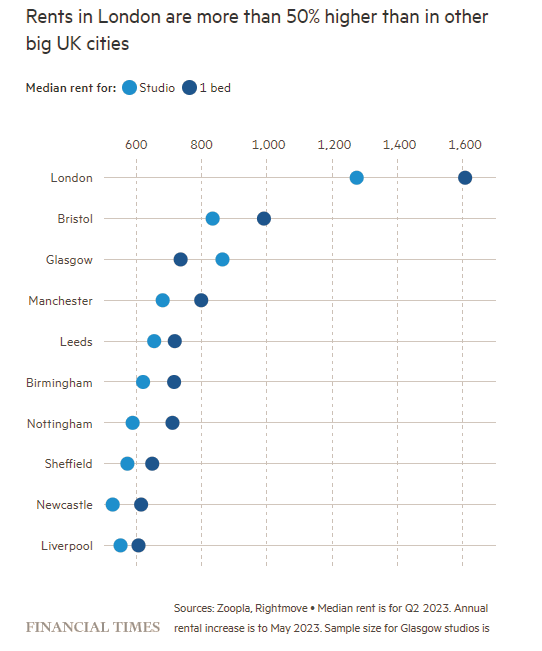
The availability of rental homes in London, which has long struggled to meet the soaring demand, faces the risk of further reduction. This concern emerges as the market was just beginning to recover from a five-year low in 2022. Private landlords play a pivotal role in housing approximately 4.8 million households across the UK, and more than 1 million of them are situated in Greater London alone, serving roughly 30 percent of households.
London’s property market is marked by vulnerability owing to its reliance on interest-only loans, rendering it sensitive to rising borrowing costs. The average two-year buy-to-let residential mortgage rate in the UK has surged from 4.5 percent in August 2022 to 6.6 percent by the close of August 2023. Alongside this, regulatory changes, such as the 2016 elimination of tax relief on buy-to-let mortgage interest and potential future energy efficiency requirements, are placing significant pressures on landlords.

This year, the number of outstanding buy-to-let mortgages has dwindled as landlords opt to pay off their debts or sell properties to shield themselves from the impact of rising interest rates. Particularly in London, where mortgage expenses are notably high, the returns on these properties are comparatively lower than in other regions. This situation is prompting a significant number of established landlords to consider selling their investments.
Click here to read more about the shifting landscape in the Buy-To-Let market
According to estimates by Hamptons, between one-third and half of homes sold by landlords re-enter the private rental market. This potential sell-off poses a risk of further constraining housing supply, a concern voiced by experts. Such a scenario would exacerbate the challenges faced by London’s most vulnerable tenants, many of whom rely on private rentals due to limited access to social housing. The evolving landscape of the buy-to-let market in London highlights the challenges faced by both landlords and tenants. While landlords grapple with the impact of rising mortgage rates, potential sell-offs, and profitability concerns, tenants, especially those reliant on the private rental sector, face the prospect of reduced housing supply. Addressing these issues requires a comprehensive approach to ensure the stability and availability of rental properties in the market.
In London, the percentage of households in social housing, which consists of homes provided by councils and not-for-profit housing associations with rents linked to incomes, varies significantly across boroughs. While some areas like Redbridge have less than 10 percent in social housing, others like Barking and Dagenham boast almost 40 percent.
Local housing allowances have failed to keep pace with rising rents, making it increasingly difficult for individuals on benefits to compete in the private rental market, according to campaign group Generation Rent. Furthermore, tenants in England can face eviction with only a two-month notice and no explanation, as early as six months into their tenancy. Although efforts to restrict such evictions are in progress through a renter’s reform bill, progress has been slow since its pledge in 2019.
Click here to read more recent interest rate rises and what they potentially mean for you
The landscape of social housing and rental regulations within London presents a complex picture. Disparities in social housing availability among boroughs and challenges faced by benefit recipients underscore the need for landlords to adapt to diverse tenant needs. As rents continue to rise, particularly on the outskirts of London, understanding these dynamics becomes crucial for both landlords and tenants in search of affordability and stability in the rental market.

London’s rental market is witnessing increased demand due to record immigration, a surge in students, and affordability challenges in homeownership. However, competition among tenants is intense, and the supply of rental homes remains limited. Rising mortgage rates and regulatory changes add pressure on landlords, potentially leading to some selling off properties.
Despite challenges, current landlords who adapt and potential landlords who seize opportunities can benefit. High demand may lead to increased rental income, but landlords must navigate evolving regulations. Understanding local dynamics and tenant needs is key. In the long term, London’s rental market offers resilient investment potential for those who persevere.
At Intra Capital Estates, we understand the complexities of being a landlord and are committed to supporting landlords in navigating these changes. Our team of experienced professionals is here to assist you with expert advice, tailored solutions, and comprehensive property management services.
If you have any questions or would like to learn more about the current housing market, or our range of services, we invite you to get in touch. Our dedicated team is ready to address your inquiries and provide the assistance you need to thrive in the evolving rental landscape.
Stay informed, stay proactive, and let Intra Capital Estates be your trusted partner in the ever-changing world of property management.
Please note that the information provided in this blog post is intended for general guidance purposes only and should not be considered as legal advice. Visit gov.uk for more information.
Get our free compliance checklist so you can rent your home legally – and avoid fines.
Want to discuss something more specific? Contact us, and we will be more than happy to help you.
"*" indicates required fields


The eviction process has changed significantly in 2026 – Section 21 has been abolished, and all London landlords now need to use Section ...

The new Renters’ Rights legislation has now passed, bringing major reforms to the private rented sector in England. These changes will di...

Central London’s urban density can make it challenging to keep mice, rats or the dreaded bed bugs away. Private landlords are responsible...


