Is your rental
property compliant?
Get our free compliance checklist so you can rent your home legally – and avoid fines.

The quiet streets of Pimlico offer relaxed riverside living within a smart central London location. Known for its signature Regency architecture and garden squares, Pimlico appeals to those seeking a quieter yet well-connected neighbourhood with easy access to Westminster, Kensington and the City.
Whether you’re considering moving or simply want to learn more, this guide covers everything you need to know about living in Pimlico.
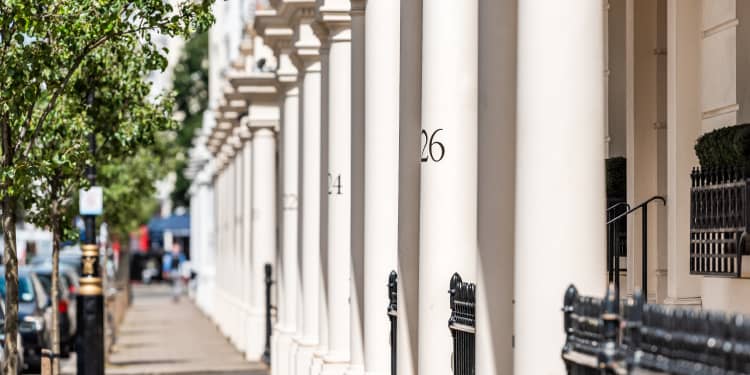
Pimlico is situated in the City of Westminster, bordered by the River Thames to the south and Victoria to the north. Its architectural heritage is hard to ignore. Pimlico’s layout, designed by Thomas Cubitt in the 19th Century, forms an orderly grid of streets lined with stucco-fronted buildings. Many properties overlook garden squares, another distinctive feature of this elegant neighbourhood.
Closely linked to exclusive Belgravia, Knightsbridge and Chelsea, Pimlico is favoured by those seeking a central London address. Pimlico offers a quieter setting than nearby areas like Victoria or Soho, for example. However, these peaceful streets disguise its close proximity to shopping, dining and major London landmarks from Westminster Cathedral to the Tate Britain and Battersea Power Station across the river. Indeed, its riverside position adds to the area’s appeal.
People often select Pimlico for its central location, and elegant ambience. The area can be a very convenient place to live, within walking distance of Westminster, Chelsea, and Belgravia. Commuters can access the Victoria line at Pimlico Underground Station, with the District and Circle line serving nearby Victoria and Sloane Square Stations and local bus routes provide straightforward public transport.
Pimlico’s architecture, mostly made up of Regency and Victorian terraces in beautiful condition, attracts those looking for period properties. The area has a reputation for being quieter than its neighbours, making it popular with professionals seeking a peaceful home to return to at the end of the day, yet still in the heart of London. Pimlico’s proximity to the Thames and Battersea Park on the opposite bank also make it easy to take a scenic walk or cycle.
Property prices in Pimlico can be high, reflecting its central location. According to Rightmove, the average price of properties sold in Pimlico over the last 12 months was £968,190. Flats are the most commonly sold property type, with an average price of £903,070. Terraced houses command higher prices, averaging just under £2 million, while rarely available detached houses can surpass £3 million.
For those looking to rent, Zoopla data suggests that the average monthly rent in Pimlico is around £2,800 for a one-bedroom flat. However, there is a broad range, with studio flats available from around £1,800 per month, while larger two-bedroom properties can exceed £3,500 per month.
Here’s a quick summary of average property prices:
| Property Type | Average Purchase Price (£) | Average Monthly Rent (£) |
| 2-Bed Flat | 400,000-2,000,000 | 2,500-5,500 |
| Terraced House | 1,000,000-3,500,000 | 4,000-20,000 |
| Studio | 200,000-500,000 | 1,500-2,500 |
Many properties benefit from well-maintained classic architecture, with heritage and geography both helping to maintain substantial property prices across all categories. Pimlico’s property market appeals to buyers and renters looking for an excellent central location with access to the Thames.
Pimlico is served by excellent public transport across London, the South East and for international travel. The area’s main Underground station is Pimlico (Victoria line), which offers direct services to Oxford Circus, Victoria, and King’s Cross. Victoria Station, within a 10-minute walk, provides Circle and District line services, and mainline rail services to the South East, as well as the Gatwick Express to Gatwick Airport.
Key public transport links include:
For cyclists, there are dedicated cycle lanes and several Santander Cycles docking stations. Walking is also convenient, with access to the Thames Path and nearby parks.
Pimlico is within the London Congestion Charge zone, and street parking is controlled by Westminster City Council. Residents can apply for parking permits, but spaces are limited.
Pimlico has a range of state and independent schools. According to Ofsted, many primary and secondary schools in the area receive favourable ratings.
Primary Schools:
Secondary Schools:
There are several independent schools within easy reach, including Eaton Square School and Westminster School. Early years childcare is well provided for, with several nurseries and pre-schools locally.
Proximity to central London universities, such as Imperial College London and University College London, is another advantage for families with older children.
Pimlico has a selection of independent shops, supermarkets, and specialist stores for every eventuality. The main retail area is along Lupus Street and Wilton Road, where you’ll find convenience shops and pharmacies. Everyday needs are covered by local butchers, bakeries, greengrocers and dry cleaners. For the big weekly shop, there’s also a large Sainsbury’s and a Tesco Express within walking distance.
Key amenities include:
Yet the local shopping scene is not just about the essentials. Pimlico is known for the Pimlico Road Design District, home to world-class art galleries, interior design showrooms, and antique shops. Larger shopping centres such as Victoria Place are only a short walk or bus journey away, providing further retail options including Boots and Holland and Barrett.
Pimlico offers a variety of places to eat, from cosy cafés to fine dining. Notable local restaurants include Goya for family-friendly Spanish tapas, The Orange Public House & Hotel for gastropub food, and A. Wong for two Michelin starred Chinese cuising.
Wilton Road and surrounding streets are home to a range of eateries serving Italian, Indian, Thai, Greek, and Middle Eastern food. There are several traditional pubs, including The Marquis of Westminster and The Warwick, which often serve local ales alongside classic pub food.
While Pimlico isn’t known for a large nightlife scene, its bars and pubs make the ideal setting for a relaxed evening. For livelier late-night options, Soho and Victoria are a short journey away.
Healthcare is well provided for in Pimlico. The area has several NHS GP surgeries, dental practices, and pharmacies. For secondary care, Chelsea and Westminster Hospital NHS Foundation Trust and St Thomas’ Hospital are nearby.
Key healthcare options:
Urgent and emergency medical care is available at St Thomas’ Hospital, which is within a short journey by public transport. Private healthcare is also accessible, with facilities like Bupa Cromwell Hospital and The Lister Hospital in nearby Chelsea.
Pimlico’s development began in the 19th Century, when Lord Grosvenor commissioned Thomas Cubitt to follow the creation of neighbouring Belgravia with a new residential neighbourhood. An area that was originally marshland would be steadily transformed into a residential district of grand terraces and squares.
This prestigious area’s history includes links to well-known figures. Winston Churchill lived on Eccleston Square, and artist Sir Winston Churchill also had a studio in the area. Fortunately for today’s residents, the area has retained its architecture and heritage. During the Second World War, Pimlico suffered bomb damage but retained much of its original architecture. Today, Pimlico’s garden squares and period buildings are preserved through careful planning and conservation area protections.
Despite its central London location, Pimlico is interspersed with garden squares, such as St George’s Square and Warwick Square, and close to sprawling parks. Many properties have access to private or semi-private gardens.
Nearby, Battersea Park (across Chelsea Bridge) offers larger open spaces, sports facilities, and riverside walks. The Thames Path, running along the south boundary of Pimlico, is popular for walking and cycling.
Pimlico’s public parks and exclusive residents only gardens include:
Notably, Battersea Park features additional outdoor exercise and children’s play areas. Battersea Sports Centre, All Weather Sports Ground and Millennium Arena expand the offering significantly with running clubs, padel, football pitches and gym suites.
According to Metropolitan Police statistics, crime rates in Pimlico are similar to other central London districts. Smart personal security and awareness are advisable, as with all inner London locations.
Pimlico is within walking or cycling distance of Westminster Abbey, Buckingham Palace, Battersea Power Station and the Tate Britain.
Yes, with access to garden squares, play areas, and family-friendly cafés, the area is well suited for families with children of all ages.
Residents can apply for parking permits via Westminster City Council, but spaces are limited due to demand.
The Victoria Line from Pimlico, and proximity to Victoria Station for Circle, District and National Rail connections make travel across London easy for commuters.
If you are considering moving to Pimlico, the process typically starts with viewing available properties and understanding the property market. Whether buying or renting, research the details that really matter to you. Perhaps you are seeking streets that offer a short walk to Pimlico station, or homes close to your ideal school choice.
Steps to move to Pimlico:
An agent with in-depth knowledge can help to connect you with properties currently on the market which may suit your needs. If you have further questions or need tailored advice, Intra-Capital Estates is here to help you at every stage of your move.
Contact us for further help and advice regarding Pimlico living.
Get our free compliance checklist so you can rent your home legally – and avoid fines.
Want to discuss something more specific? Contact us, and we will be more than happy to help you.
"*" indicates required fields


Discover the charm of Pimlico with our guide to its top streets and main areas! Uncover hidden gems, elegant garden squares, and vibrant ...

Step into Pimlico, where elegant garden squares and striking stucco-fronted terraces define one of London’s most captivating neighborhood...

Discover the heart and soul of Victoria by exploring its most vibrant neighbourhoods and bustling main streets. From historic quarters br...


